Share this guide
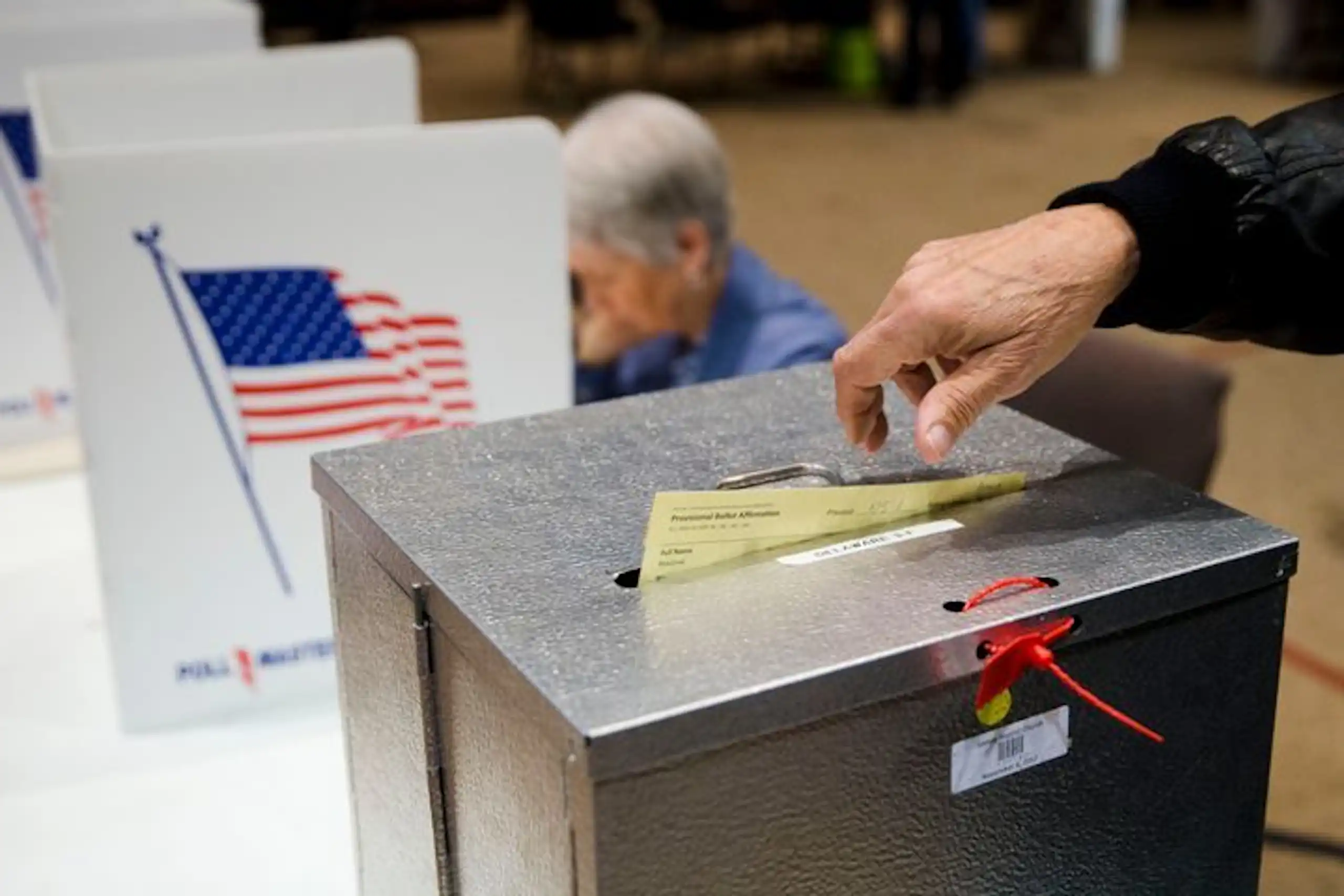
Link copiedA provisional ballot is used when a voter's eligibility cannot be fully resolved at the time they try to vote. The ballot is kept separate while election officials investigate the issue.
If officials later determine that the voter was eligible under the applicable state law, the ballot is counted as that law requires. Depending on the reason it was issued and the jurisdiction's rules, all of the ballot, part of it, or none of it may ultimately be counted.
Why do provisional ballots exist?
Provisional voting is a fail-safe process.
A voter may arrive at a polling place believing they are registered and eligible, but the information available to the poll worker may not be enough to confirm that immediately.
Provisional voting lets the person cast a ballot while the decision is postponed until election officials can review fuller records. It does not bypass state eligibility rules; it postpones the eligibility determination.
When does federal law require a provisional ballot?
The Help America Vote Act of 2002 (HAVA) established federal provisional-voting requirements for federal elections.
In covered jurisdictions, a voter must be allowed to vote provisionally when:
- the voter says they are registered and eligible, but their name does not appear on the official list for the polling place; or
- an election official asserts that the voter is not eligible.
The voter signs a written affirmation that they are registered in the jurisdiction and eligible to vote in the election.
HAVA also requires provisional voting when a federal court extends polling-place hours beyond the normal closing time.
State law can provide additional reasons for issuing provisional ballots.
Why might a voter receive one?
Common reasons include:
1. The voter's name is not on the poll list
A poll list is used to verify voters at check-in.
A name may be missing because of a registration issue, address change, database problem or incorrect polling location.
2. The voter's eligibility is challenged
A challenge questions whether a person is eligible to vote or whether a ballot should be accepted.
Depending on state law, a challenged voter may cast a challenged ballot or another form of provisional ballot while the issue is reviewed.
3. Required identification is missing
Some states use provisional ballots when a voter cannot present the required voter identification.
The voter may have a limited period after Election Day to provide it.
4. A mail ballot was already issued
If records show that a mail ballot was issued, election officials may need to confirm whether it was returned or counted before accepting another ballot.
Provisional voting allows that check to happen before a second ballot is counted.
How is a provisional ballot handled?
A provisional ballot is not immediately mixed with ballots ready for tabulation.
It is commonly placed in a provisional ballot envelope or other secured container carrying the information needed to research the voter's eligibility.
The ballot and affirmation are then sent to the appropriate election officials for verification.
Officials may check:
- voter-registration records;
- name, address or date of birth;
- whether required identification was supplied;
- whether another ballot was already returned;
- whether the voter used the correct precinct or jurisdiction;
- primary-election party eligibility; or
- information related to a voter challenge.
Some voters may need to supply additional information after Election Day. Deadlines vary by state.
When does a provisional ballot count?
Under HAVA, if election officials determine that the voter was eligible under state law, the provisional ballot must be counted in accordance with state law.
That final phrase is important because federal law creates the safeguard, while states determine many of the counting rules.
A provisional ballot can therefore have three outcomes:
- Full count: all eligible votes are counted.
- Partial count: only contests the voter was legally eligible to vote in are counted.
- Not counted: the ballot fails the applicable eligibility or procedural requirements.
A provisional ballot is therefore neither automatically valid nor automatically rejected.
Can only part of the ballot count?
Yes, in some states.
This commonly arises when a voter casts a provisional ballot in the wrong precinct.
Different precincts can have different local contests, so the ballot may contain some races the voter was eligible to participate in and others they were not.
The National Conference of State Legislatures (NCSL) reports that some states count eligible contests on a wrong-precinct ballot, while others reject it under their precinct rules. The correct ballot style can therefore matter.
HAVA does not impose one nationwide wrong-precinct rule.
Why might a provisional ballot not be counted?
Common reasons include:
- the voter was not registered or eligible;
- the ballot was cast in a jurisdiction or precinct where state law does not allow it to count;
- required identification was not provided by the deadline;
- another ballot from the same voter had already been counted;
- required provisional paperwork was incomplete; or
- a state-specific requirement was not met.
Simply being provisional is not a reason for rejection.
The decision should follow the applicable law and the facts found during the review.
How does provisional voting help prevent double voting?
Provisional voting can be used when officials cannot immediately determine whether a voter has already voted.
For example, records may show that a mail ballot was issued.
Instead of automatically counting another ballot, officials keep the provisional ballot separate while checking whether the earlier ballot was returned or accepted.
The EAC explains that provisional ballots are processed only after officials verify eligibility and that another ballot was not already counted.
Is a provisional ballot the same as an affidavit or fail-safe ballot?
Terminology varies by state.
Some jurisdictions use terms such as affidavit ballot, challenge ballot or fail-safe ballot for similar procedures.
ESG's affidavit ballot entry describes a state-specific form of provisional ballot accompanied by a voter affidavit.
A fail-safe voter is a voter whose eligibility or record cannot be fully confirmed at check-in but who is permitted to vote through a fail-safe process.
The legal procedure matters more than the label.
How can a voter find out whether it counted?
HAVA requires a free access system for provisional voters.
This can be a toll-free telephone number, website or another permitted method.
If it was not counted, the system must provide the reason.
Poll workers must give provisional voters written information explaining how to access the system, and information about an individual ballot must be protected from unauthorised access.
Do all states use provisional ballots the same way?
No.
States differ on:
- reasons a provisional ballot can be issued;
- identification requirements;
- wrong-precinct rules;
- deadlines for providing missing information;
- who reviews the ballot;
- when it is processed; and
- whether partial counting is allowed.
Six states are exempt from HAVA's general provisional-ballot requirement because of the registration systems they had when HAVA was enacted. NCSL reports that Idaho, Minnesota and New Hampshire do not issue provisional ballots, while other exempt states use them in some circumstances.
For a particular election, the relevant state or local election authority is the controlling source.
Related ESG terms
- Provisional Ballot
- Provisional Ballot Envelope
- Provisional Voting
- Provisional Vote
- Fail-Safe Voter
- Affidavit Ballot
- Challenge
- Challenged Ballot
- Voter Identification
- Poll List
- Ballot Style
Frequently asked questions
1. Does casting a provisional ballot mean my vote will not count?
No. It means eligibility or another requirement has not yet been resolved. If election officials determine that the voter was eligible and the ballot satisfies state rules, all or the eligible portion of the ballot is counted.
2. How long does it take to determine whether a provisional ballot counts?
Timing varies by state. Some jurisdictions resolve provisional ballots within days, while others process them during the official canvass. The timetable can also depend on whether the voter has additional time to supply identification or other documentation.
3. What happens if a provisional ballot is cast in the wrong precinct?
State law controls the result. Some states count votes for contests the voter was eligible to vote in, while others do not count wrong-precinct provisional ballots.
4. Can someone vote provisionally if a mail ballot was already issued?
In many jurisdictions, yes. Officials can use the provisional process to check whether the mail ballot was returned or counted. The provisional ballot is accepted only after officials confirm that another ballot has not already been counted.
Sources and further reading
- U.S. Election Assistance Commission — Overview of Federal Election Laws: HAVA and Provisional Ballots
- U.S. Election Assistance Commission — Provisional Voting
- U.S. Election Assistance Commission — Election Management Guidelines: Provisional Ballots
- U.S. Election Assistance Commission — Provisional Ballots Quick Start Management Guide
- U.S. Election Assistance Commission — How do election officials prevent someone from voting twice?
- U.S. Department of Justice — Title 52: Help America Vote Act Provisional Voting Requirements
- National Conference of State Legislatures — Provisional Ballots
ESG editorial note: Election Security Glossary is an educational and reference resource. It is not an election authority and does not provide legal advice or official voting instructions. Provisional-ballot eligibility, documentation, counting and deadlines vary by jurisdiction; consult the relevant election authority for rules that apply to a specific voter or election.