Share this guide
Link copiedChain of custody in elections is the documented process used to track who has possession or control of ballots, voting equipment and other election materials as they move through the election lifecycle. Records can show who handled an item, when and where it was transferred, its condition, and who witnessed the transfer.
Chain of custody does not protect ballots by paperwork alone. It works with secure storage, restricted access, locks, tamper-evident seals, witness procedures and reconciliation. Together, these controls help officials account for election materials and provide evidence that required procedures were followed.
What does “chain of custody” mean in an election?
The ESG glossary defines chain of custody as a process for tracking movement and handling by documenting who handled an item, when it was collected or transferred, and why the transfer occurred.
The U.S. Election Assistance Commission (EAC) describes chain of custody as the process or paper trail documenting a transfer from one person or place to another. Its Chain of Custody Best Practices recommends written procedures before an election and documentation of each step once the process begins.
What information is recorded?
A custody record should help reconstruct what happened to an election asset. Depending on local rules, it may document:
- the item or container being tracked;
- serial, seal or other identifying numbers;
- date, time and location of a transfer;
- who released and received the item;
- who witnessed the transfer;
- the item's condition; and
- why a seal was opened or replaced.
A seal can show visible evidence that a container or device may have been accessed. The custody record provides the accountability around that control by recording when the seal was checked, broken or replaced and by whom.
A seal is therefore a physical safeguard; chain of custody is the documented sequence connecting those safeguards over time.
How does chain of custody work at polling places?
Before voting, materials may be transported from secure storage to a voting location. A poll worker or other authorised official may verify equipment or seal numbers, sign custody forms and document receipt.
During voting, ballots are handled and stored according to the jurisdiction's procedures. Paper ballots may be associated with a ballot scanner and secured in an approved container.
After polls close, officials can document ballot totals, equipment status and seal numbers before transferring materials to an election office or counting location.
The EAC recommends documented transfers and witness-based controls, but the exact requirements including whether bipartisan teams are required depend on state and local rules.
How does it work for mail and drop-box ballots?
An absentee ballot, often called a mail ballot, follows a different custody path from an in-person ballot.
The EAC identifies important checkpoints such as receiving ballots from a printer, issuing them to voters, collecting returned ballots, processing them, counting them and placing them in storage.
Rules for receiving, verifying and opening a ballot envelope vary by state.
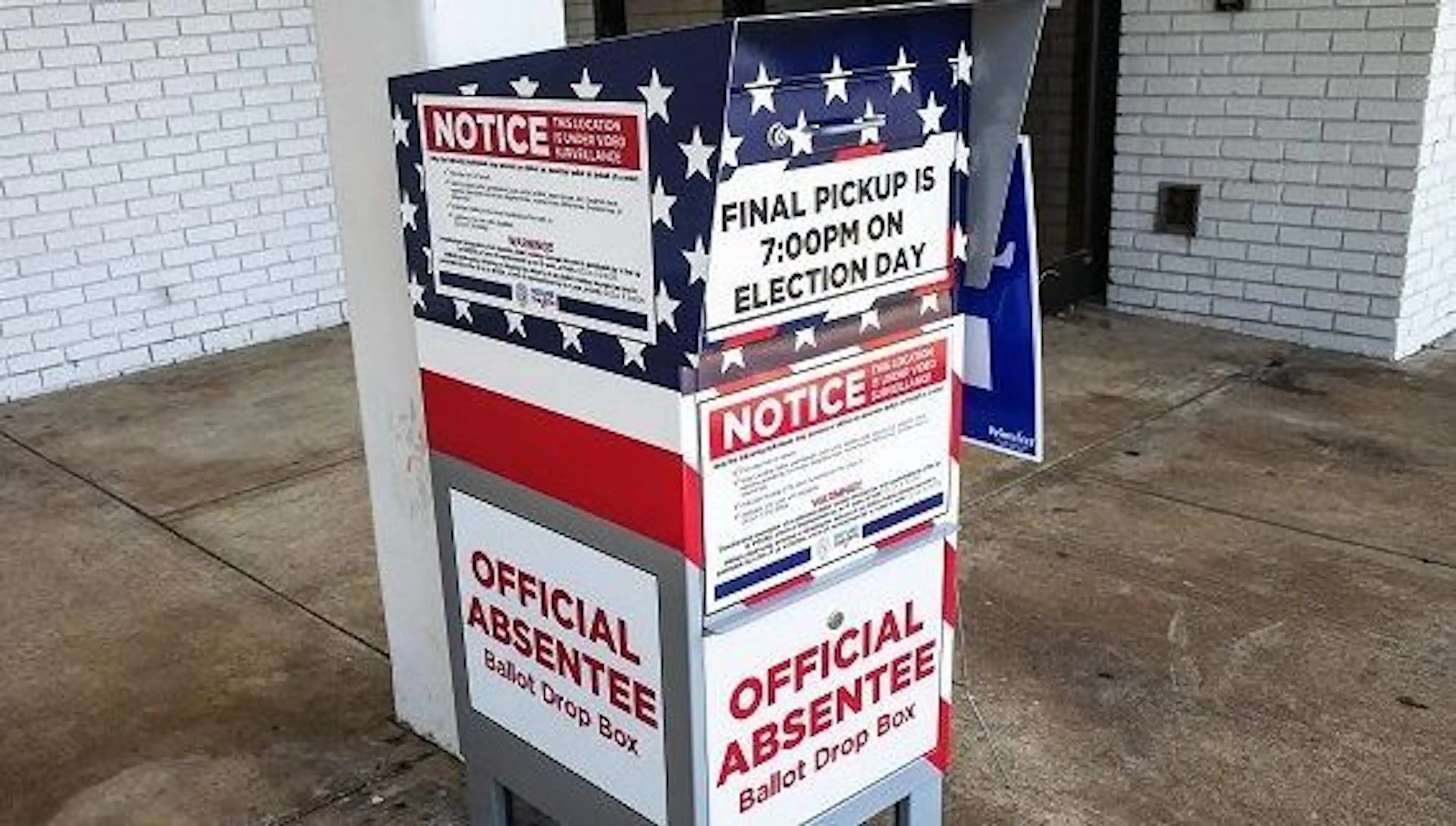
For drop boxes, states commonly use controls such as locks or seals, surveillance and chain-of-custody procedures. The EAC notes that collection is limited to authorised election officials, often working in teams. See How do drop boxes work?.
Collection records can document how many ballots were removed, when collection occurred, who participated and where the ballots were delivered.
What happens during transport and storage?
Transfers are important because responsibility moves from one person or location to another.
Voted ballots may be placed in a secured ballot container. Officials may record the container and seal numbers, departure and arrival times, the people responsible for transport and the condition of the container when received.
Storage remains part of the custody chain. Jurisdictions may restrict access, maintain entry records, monitor storage areas, inspect seals and document authorised openings.
The objective is to be able to answer: Where are the ballots, who is responsible for them, and what has happened since the last documented checkpoint?
Does chain of custody apply only to paper ballots?
No. It can also cover a voting system, tabulation equipment, electronic pollbooks, removable media and other election technology.
For voting systems, the EAC recommends considering who can access hardware and software, who may make changes or load media, when seals can be broken, and how equipment is stored and transferred.
These records can complement an audit trail, which can document actions inside a system.
How does chain of custody support counting and audits?
Officials may document which containers or batches are opened, who handles them and when ballots are resealed or returned to storage.
That record becomes especially useful during a post-election review. A tabulation audit, for example, compares a hand count of sampled paper records with corresponding reported totals.
Some audit methods also use a ballot manifest, which identifies how physical ballots are organised and where they are stored.
How do the controls fit together?
A simplified paper-ballot path can look like this:
Preparation → secure storage → delivery → voting or ballot return → secured transport → tabulation → audit or reconciliation → post-election storage.
At relevant handoffs, documentation records possession, time, location, identifiers and condition. Physical controls protect materials between those checkpoints.
The two layers serve different purposes:
- Physical and procedural safeguards reduce opportunities for unauthorised access or unnoticed interference.
- Custody documentation creates an accountable record that can be reviewed when a question or discrepancy arises.
A locked container without a transfer record leaves important questions unanswered. A completed form cannot compensate for materials that were not physically secured.
Does a chain-of-custody problem prove ballots were altered?
Not necessarily.
A missing signature, unexplained seal change or other custody discrepancy can require review. It may show that a documentation or control requirement was not followed correctly, but it is not automatically proof that ballots were changed or that an election result is wrong.
Officials may need to compare ballot counts, witness records, access logs, surveillance, equipment records, audit results and other evidence to determine what happened.
Chain of custody is therefore an accountability and evidence system, not a standalone test of election validity.
Do chain-of-custody rules vary by state?
Yes. U.S. election administration is decentralised.
States and local jurisdictions can differ in the forms they use, who signs them, whether teams must include representatives from different political parties, how seals are managed, how ballots are transported and how records are retained.
The EAC's chain-of-custody material is best-practice guidance, not one nationwide operating procedure. For a specific election, the relevant state or local election authority is the source for the controlling rules.
Related ESG terms
- Chain of Custody
- Seal
- Ballot Container
- Poll Worker
- Absentee Ballot
- Ballot Envelope
- Ballot Scanner
- Voting System
- Audit Trail
- Ballot Manifest
- Tabulation Audit
- Post-election Audit
Frequently asked questions
1. Who is allowed to handle ballots?
That depends on state and local law and on the stage of the election. Election officials, poll workers, authorised transport teams or other designated personnel may handle ballots as part of their duties. Custody procedures identify authorised roles and document transfers between responsible people or locations.
2. Are ballots always transported by two people?
No single nationwide rule applies. The EAC recommends witness-based controls and notes that election materials often involve at least two witnesses. The actual legal requirement depends on the jurisdiction.
3. What happens if a ballot-container seal is broken?
A broken seal is not automatically evidence of tampering. Seals may be opened for authorised processing, tabulation or auditing. Good custody procedures document why a seal was opened, who was present, when it occurred, the condition of the materials and any replacement seal.
4. Why does chain of custody matter during an audit?
Auditors need to identify and locate the correct election records. Custody documentation helps show how ballots were stored and transferred after voting. Combined with inventory records such as a ballot manifest, it helps connect the physical ballots reviewed during an audit to the election records being verified.
Sources and further reading
- U.S. Election Assistance Commission — Chain of Custody Best Practices
- U.S. Election Assistance Commission — Election Security Preparedness
- U.S. Election Assistance Commission — Election Management Guidelines
- U.S. Election Assistance Commission — Election Technology Best Practices
- U.S. Election Assistance Commission — How do drop boxes work?
- U.S. Election Assistance Commission — Election Results, Canvass, and Certification
ESG editorial note: Election Security Glossary is an educational and reference resource. It is not an election authority and does not provide legal advice or official voting instructions. Chain-of-custody requirements vary by jurisdiction; consult the relevant election authority for rules that apply to a specific election.

